How Whisky Is Made: A Beginner’s Guide

Understanding Bourbon, Scotch, Japanese & Australian Whisky

While whisky is made using the same core steps worldwide, regional rules, ingredients, and climate create distinct styles. Below is a brief explanation of each stage, followed by how the major whisky styles differ.

  • Three wheat stalks and scattered wheat grains on a wooden surface.

    Preparation

    Whisky production begins with selecting grains, water, and yeast, which form the foundation of flavor and character.

    Key Insight: Grain choice has the biggest impact on a whisky’s base flavor before distillation or ageing begins.

    Bourbon: At least 51% corn, creating a sweet, full-bodied base.

    Scotch: Primarily malted barley; peat may be used for smoky notes.

    Japanese: Malted barley with a strong focus on water purity and balance.

    Australian: Flexible grain choices, often emphasizing local and experimental inputs.

  • A black scoop stirring a mixture of sand and water in a large container.

    Mashing

    Mashing mixes ground grain with hot water to convert starches into fermentable sugars.

    Why It Matters: Efficient mashing determines how much alcohol can be produced and influences mouthfeel.

    Bourbon: Cooked mash, often using the sour mash method.

    Scotch: Infusion mashing with multiple water extractions.

    Japanese: Similar to Scotch, with precise temperature control.

    Australian: Combines traditional and craft brewing techniques.

  • Close-up view of a large metal container filled with a yellowish, bubbly liquid, likely cheese or curd in the cheese-making process.

    Fermenting

    During fermentation, yeast converts sugars into alcohol while creating flavor compounds.

    Flavour Builder: Many fruity, floral, and spicy notes are created during fermentation—not distillation.

    Bourbon: Shorter fermentations that produce bold, robust flavors.

    Scotch: Longer fermentations, resulting in fruity and complex notes.

    Japanese: Carefully managed fermentations for smoothness and balance.

    Australian: Warm climate often accelerates fermentation; experimental yeasts are common.

  • Copper stills used for distillation inside a large industrial space with a glass roof.

    Distilling

    Distillation heats the fermented liquid to separate and concentrate alcohol and flavor.

    Still Shape Matters: The size and shape of a still directly influence the weight and texture of the spirit.

    Bourbon: Typically distilled in column stills, often with a doubler.

    Scotch: Copper pot stills, usually double distilled.

    Japanese: A variety of pot still shapes to create diverse spirit styles.

    Australian: Both pot and column stills, often in small batches.

  • Rows of wooden wine barrels stored on racks in a wine cellar.

    Ageing

    Ageing allows whisky to mature in wooden barrels, developing color, aroma, and depth.

    Most Flavor Comes From Ageing: Up to 70% of a whisky’s final flavor can come from the barrel.

    Bourbon: Aged in new, charred American oak barrels for rich vanilla and caramel notes.

    Scotch: Matured in used oak barrels, leading to slower, subtler flavour development. Minimum 3 Years

    Japanese: Uses varied wooden casks, including Mizunara oak, to enhance complexity. Minimum 3 Years

    Australian: Hot climates accelerate aging, producing intense, wood-driven flavors. Minimum 2 Years

  • Person pouring rosé wine from a bottle into a wine glass.

    Bottling

    Before release, whisky may be filtered, diluted, and bottled to its final strength.

    Final Touch: Bottling decisions affect clarity, texture, and perceived smoothness.

    Bourbon: Often bottled at higher strengths with chill filtration. Minimum 40% ABV

    Scotch: Bottled at regulated strengths; sometimes non-chill filtered. Minimum 40% ABV

    Japanese: Emphasis on balance and approachability. Minimum 40% ABV

    Australian: Frequently bottled at cask strength with minimal processing. Minimum 37.5% ABV

Dive Deeper into Whisky Knowledge Below
  • A glass of whisky sitting on firewood logs.

    A Submariners Guide to Whisky Styles

    Whisky Styles explained.

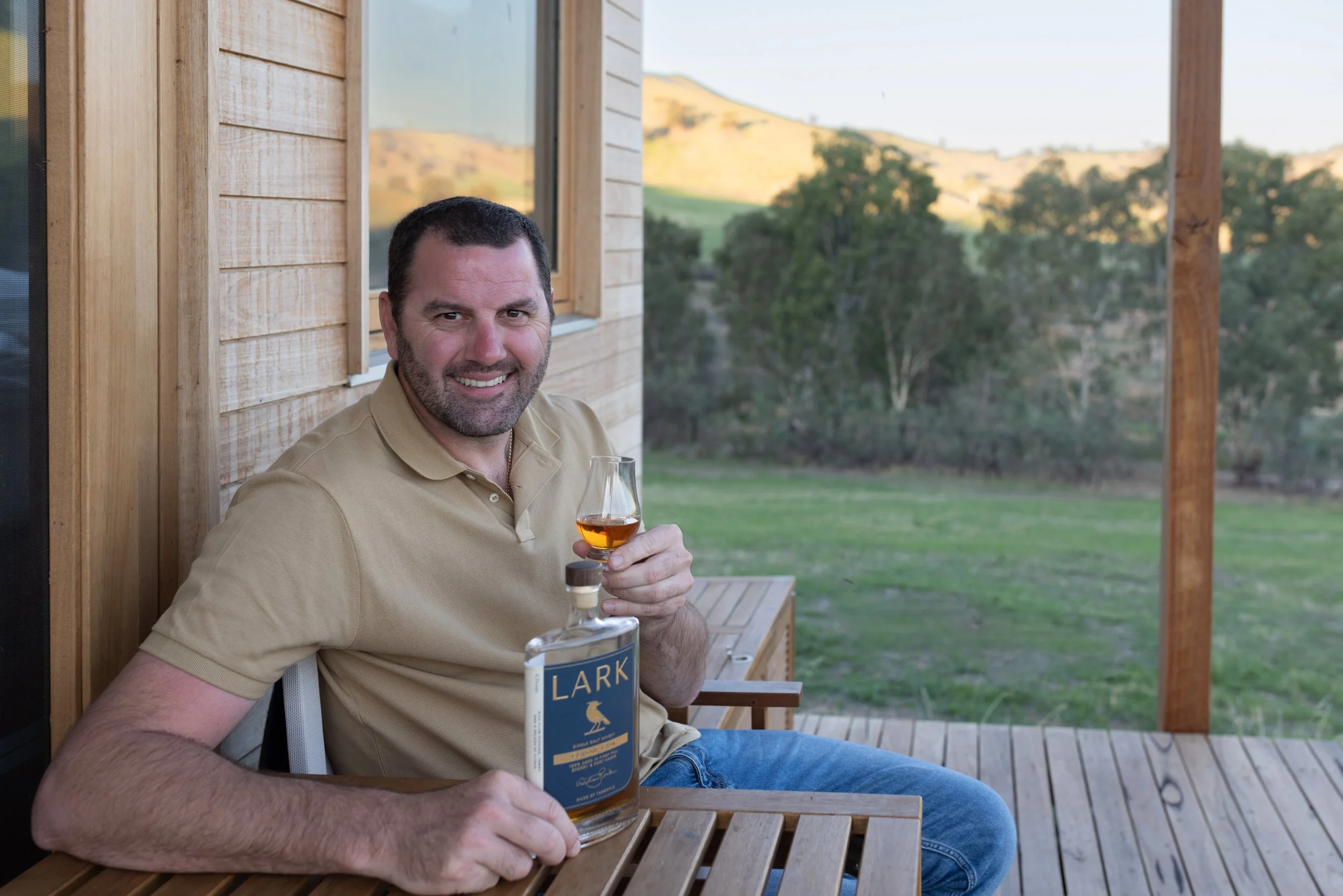
  • A man sitting on a deck smiling holding a glass of whisky and a bottle of Lark whisky.

    Distilleries

    Explore Australia’s whisky makers, their craft, and their stories.