How Whisky Is Made: A Beginner’s Guide
From Grain to Glass
Every bottle of whisky has a story long before it’s poured into a glass.
Whether it’s an Australian single malt, a Kentucky bourbon or a Japanese whisky, they all begin with a handful of simple ingredients and a process that has been refined over centuries.
While every distillery has its own methods and traditions, the journey from grain to glass follows the same fundamental stages. Understanding those stages not only helps explain why whiskies taste different, but also deepens your appreciation for the craftsmanship behind every bottle.
This guide isn’t about turning you into an expert—it’s about helping you understand what’s happening inside the distillery, one step at a time.
-
Preparation
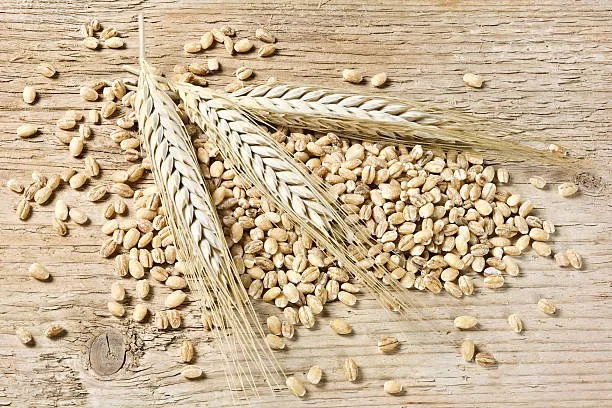
Whisky production begins with selecting grains, water, and yeast, which form the foundation of flavor and character.
Key Insight: Everything begins with grain.
Different grains contribute different flavours and characteristics, making this one of the first decisions a distiller must make.
Common grains include:
Barley – Rich, malty and the foundation of most single malt whiskies.
Corn (Maize) – Adds sweetness and is the primary grain in bourbon.
Rye – Produces bold, spicy and peppery flavours.
Wheat – Creates a softer, smoother and often sweeter spirit.
Many whiskies combine several grains to achieve a particular flavour profile, while others, such as single malts; are made entirely from malted barley.
-
Malting
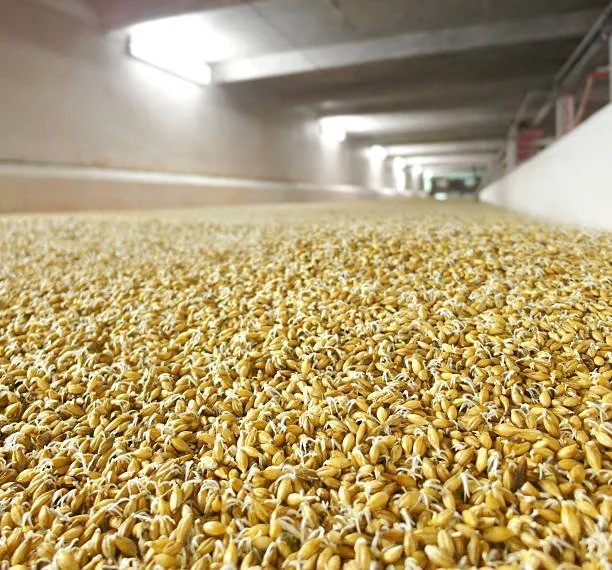
If barley is being used, it usually needs to be malted.
The grain is soaked in water and allowed to germinate, activating natural enzymes inside each kernel. These enzymes convert stored starches into sugars that yeast can later ferment into alcohol.
Once enough germination has occurred, the process is stopped by drying the grain in a kiln.
Key Insight: Some distilleries use peat during drying, allowing smoke to pass through the barley and create the distinctive smoky character found in some whiskies.
The dried malt is then crushed into a coarse flour known as grist.
Rather than becoming a fine powder, the grain is broken into a carefully balanced mixture of husks, coarse pieces and flour.
This helps maximise sugar extraction while allowing water to flow efficiently during mashing.
-
Mashing
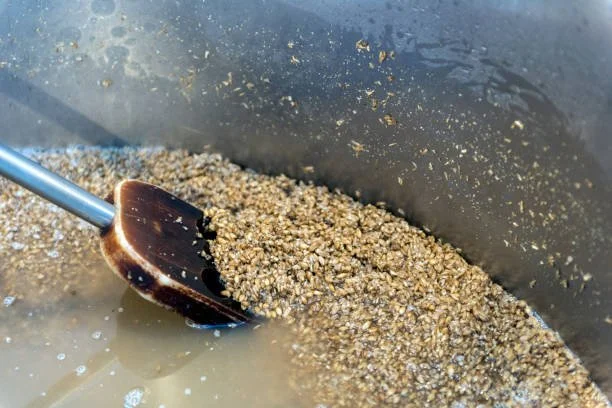
Mashing mixes ground grain with hot water to convert starches into fermentable sugars.
Why It Matters: Efficient mashing determines how much alcohol can be produced and influences mouthfeel.
Key Insight: The grist is transferred into a large vessel called a mash tun.
Hot water is added in several stages, dissolving the natural sugars created during malting.
The result is a sweet liquid known as wort.
The remaining grain, called draff, isn’t wasted. It’s commonly recycled as nutritious livestock feed.Some distilleries use peat during drying, allowing smoke to pass through the barley and create the distinctive smoky character found in some whiskies.
-
Fermenting
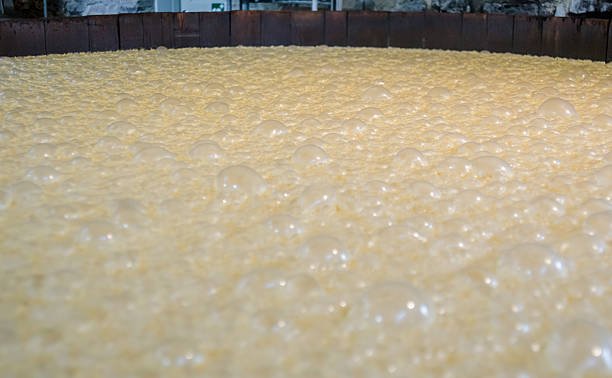
During fermentation, yeast is added and begins consuming the sugars, producing alcohol along with hundreds of flavour compounds.
Flavour Builder: Many fruity, floral, and spicy notes are created during fermentation—not distillation.
Key Insight: The cooled wort is pumped into fermentation vessels called washbacks.
This stage usually lasts between two and five days, depending on the distillery’s production methods.
When fermentation is complete, the liquid—called wash—contains roughly 7–10% alcohol, similar in strength to many beers.
Although it isn’t particularly pleasant to drink, much of a whisky’s fruity and floral character begins developing during fermentation.
-
Distilling
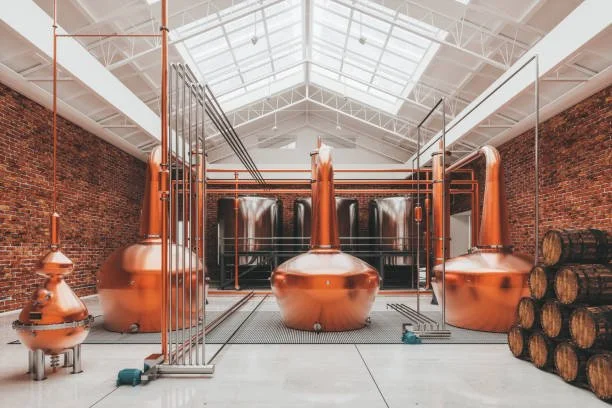
Distillation heats the fermented liquid to separate and concentrate alcohol and flavor.
Still Shape Matters: The size and shape of a still directly influence the weight and texture of the spirit.
Most single malt distilleries use traditional copper pot stills, while some grain distilleries use continuous column stills for greater efficiency.
Key Insight: Copper plays an important role by helping remove unwanted sulphur compounds and creating a cleaner, smoother spirit.
Many distilleries distil their spirit twice, while others—including some Australian distilleries—may use three distillations or different approaches to achieve their desired character.
Only the highest-quality portion of the spirit, known as the heart cut, is collected for maturation.
-
Ageing
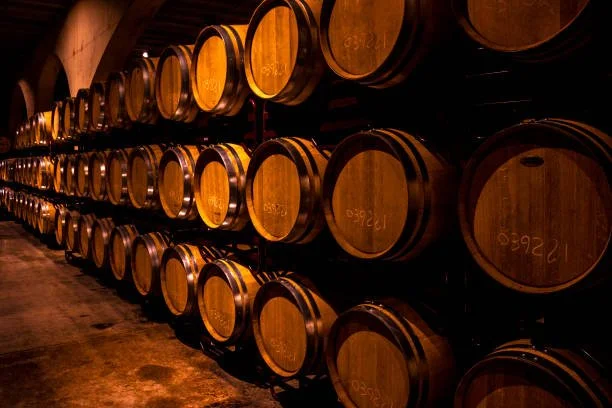
Ageing allows whisky to mature in wooden barrels, developing color, aroma, and depth.
Most Flavor Comes From Ageing: Majority of a whisky’s final flavor will come from the barrel.
New spirit is clear and colourless.
To become whisky, it must mature in wooden casks.
Key Insight: As the spirit rests inside the barrel, it slowly extracts colour, flavour and aroma from the oak while interacting with oxygen through the wood.
The type of cask has a significant influence on the finished whisky.
Common casks include:
Ex-Bourbon
Ex-Sherry
Ex-Port
Ex-Wine
Virgin Oak
Over time, flavours such as vanilla, caramel, dried fruit, spice, chocolate and toasted oak develop naturally.
A small amount of spirit also evaporates each year—often referred to as the Angel’s Share.
-
Bottling
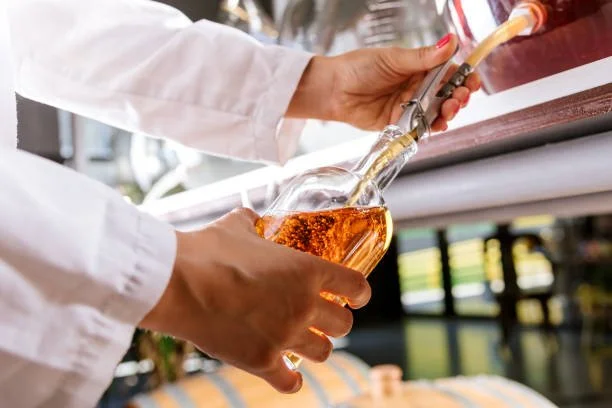
Once the whisky has reached the desired level of maturity, it is prepared for bottling.
Before bottling, some whiskies are blended to create a consistent house style, while others are bottled as single casks to showcase the unique character of an individual barrel.
Final Touch: Bottling decisions affect clarity, texture, and perceived smoothness.
Some whiskies are chill filtered, while others are bottled naturally to retain additional oils and texture.
The spirit may also be diluted to the desired bottling strength using pure water before being bottled, labelled and prepared for release.
-
Why Every Step Matters
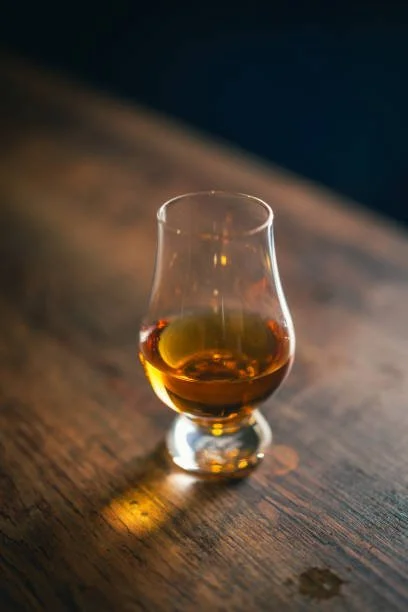
Every decision made throughout the production process influences the whisky in your glass.
The choice of grain, the length of fermentation, the shape of the stills, the type of cask and the years spent maturing all contribute to the final flavour.
No single step creates a great whisky on its own. Instead, it’s the combination of hundreds of careful decisions made by skilled distillers over many years.
Understanding this journey doesn’t tell you which whisky you’ll enjoy most—but it does help explain why every bottle is unique.
-
Continue Your Learning Journey
Understanding how whisky is made helps explain why no two whiskies taste exactly the same. Differences in grain, fermentation, distillation, cask selection and maturation all shape the character of the final spirit.
The next step in your learning journey is understanding whisky styles—discovering what terms like Single Malt, Bourbon, Blended Whisky and Rye actually mean, and how they help describe what’s in your glass.
Follow the learning journey below.